Crucified?
From A collection of short essays. Project references reflect the source essay; see our current status.
What does this word mean? Well, the centre or root of the verb is the Latin noun ‘crux’, so now the verb is considered to mean ‘crossified’ or ‘to be strung up on a cross’. But the New Testament wasn’t written in English (or Latin). So what Greek word does it translate?
Well the Greek word σταυρόω (stauroō) means ‘to build a picket fence’, or in hand-fighting days, ‘to fence with stakes’. For New Zealanders, this drawing of palisades might give the idea:
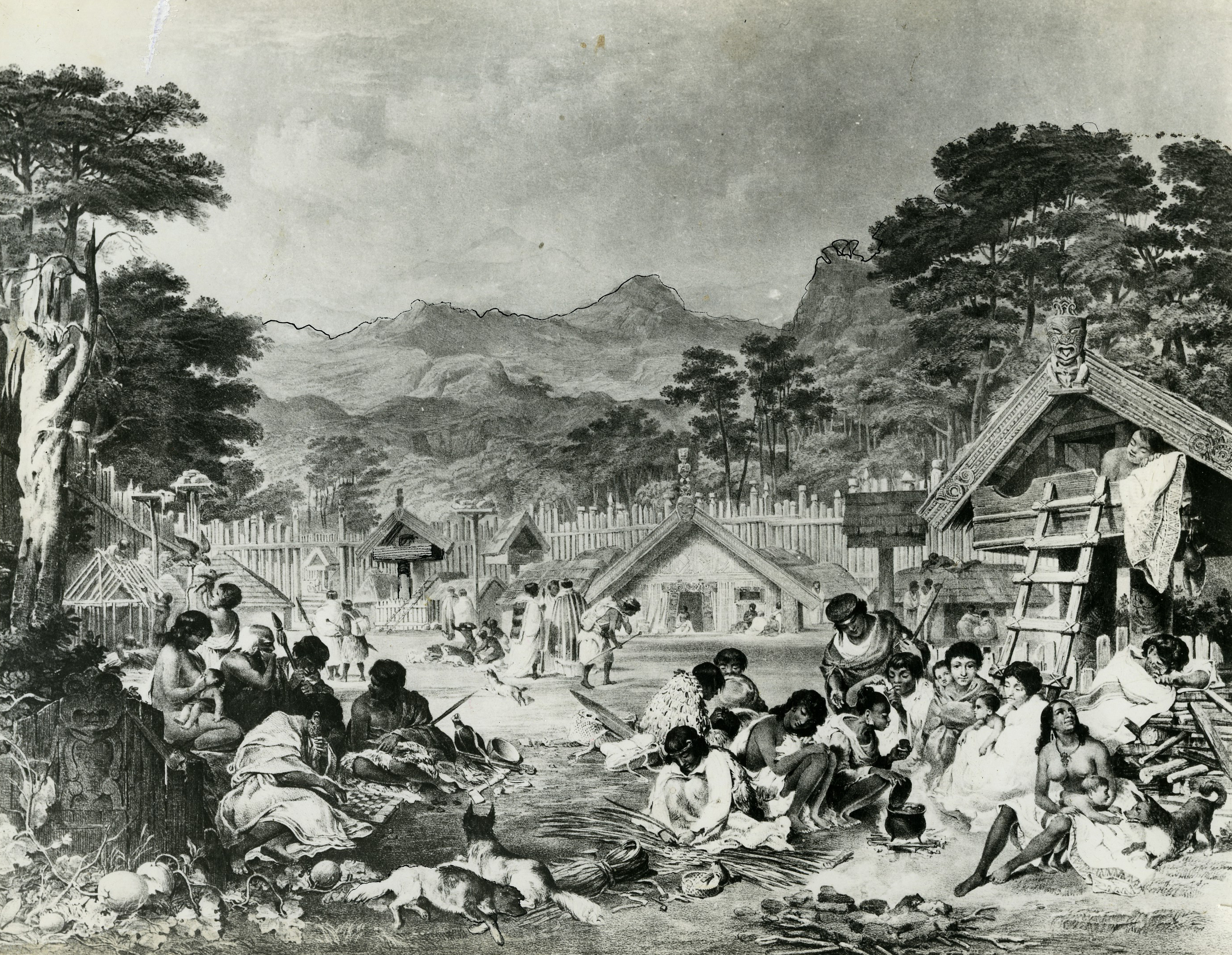
So the centre or root of the Greek verb is the noun that means ‘stake’ as used in a palisade. However, in modern English usage, a ‘tomato stake’ might be something relatively short and thin, so other synonyms like ‘pole’ or ‘post’ might be better. Looking at images in a search engine, most ‘poles’ were metal or fibreglass (although we still have a wooden powerpole right outside our gate). We have made the decision to use ‘post’ in the OET Readers’ Edition, but to supplement it with some clarifying adjectives to ‘tall wooden post’.
Now execution on a post/stake/pole was something that the cruel Persian armies used, but we understand that the Romans perfected it, especially as a method of torture where the victim would often take quite some days to die.
As well as a single wooden post, it’s certainly possible for the word ‘crucified’ to mean that there was a cross-bar at the top (T-style) or part-way up (†-style) or X-style, but the Bible doesn’t state that. (The Romans used several styles at their whim, including executing people upside-down.)
However, it should be noted that in Yeshua’s (Jesus’) case, all four writers who documented the crucifixion tell us that sign was placed above his head, so that seems to rule out the X-style in his case, and possibly make the T-style less likely. (A small upright stick could have been attached at the back of the post to hold the sign.)
Yeshua/Jesus himself (and then Shim’on/Simon from Kurainai/Cyrene) was forced to carry the post (or possibly just part of it, although if the word same Greek word ‘σταυρός’ being ‘stauros’=‘stake/post’ was somehow being used here for a cross-beam, that would also raise questions about how it was then attached to the main post at the execution site).
None of those four accounts mention nails, but Yohan/John does mention them later when Toma/Thomas asks to see the marks from the nails. (Luke also tells them to Look at my hands and feet which would probably also suggest nailing rather than rope-burns.) Paul also wrote about nailing. Some suggest that since Yohan/John used the plural ‘nails’, then that leans towards the †-style cross (although nothing would have prevented two nails being used for the hands even on a single post.
So the Open English Translation uses the wordy ‘executed on a tall post’ to suggest a single pole/stake, yet also allow for the traditionally accepted †-style possibility.
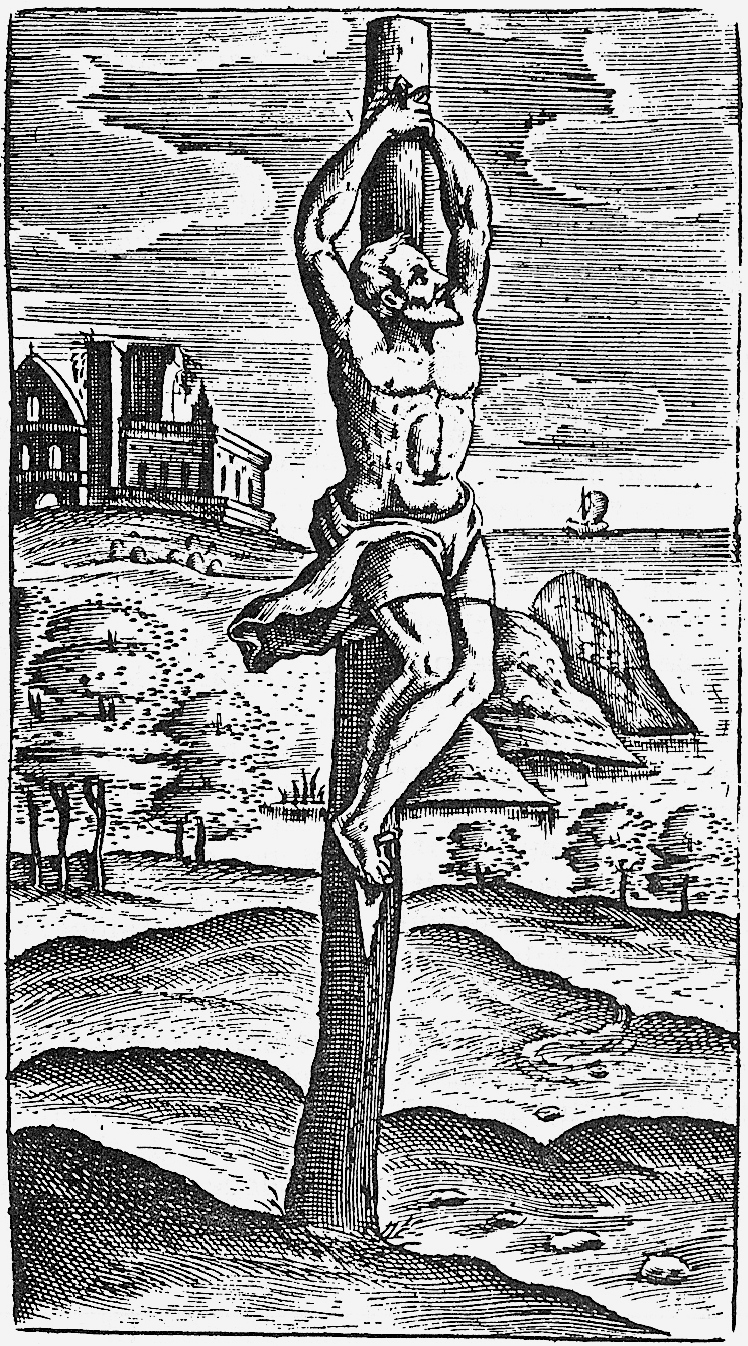
Anyway, hopefully that nice silver cross hanging around your neck on a chain could well be the correct torture instrument. 50-50 perhaps, or maybe 60-40???
The Open English Translation seeks accuracy over tradition for a new generation of truth seekers.
Illustrations from https://en.wikipedia.org/wiki/Crucifixion